Author: admin

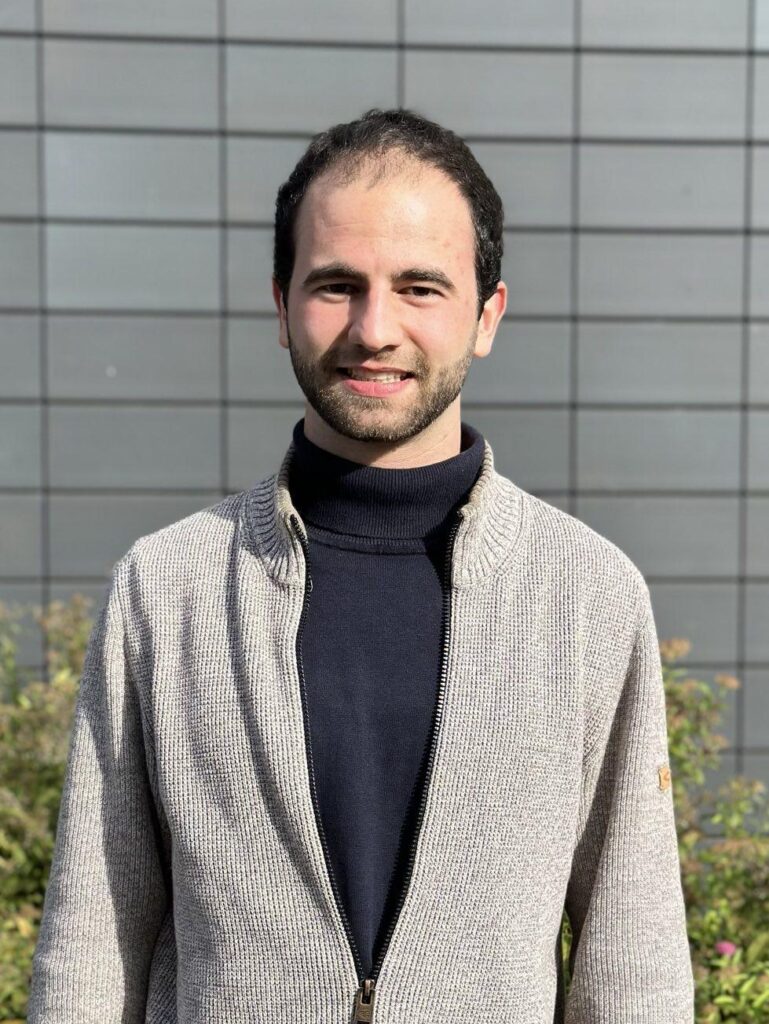
  • Cedric Becker – Master Thesis on brain tumors

    How can AI and machine learning improve the treatment and prognosis of brain tumors?
    My Master’s thesis addresses this question by focusing on the data-driven analysis of meningiomas (brain tumors) using modern machine learning techniques. In cooperation with the University Medical Center Mannheim, clinical patient data are evaluated computationally to identify patterns in the course of the disease and its treatment. The primary focus is on developing predictive models that provide forecasts regarding surgical outcomes, postoperative consequences, and tumor dynamics. Ultimately, this work aims to demonstrate how machine learning and data-driven methods can support translational medicine and personalized patient care

  • Christmas celebrations at the Physikalisches Institut !!

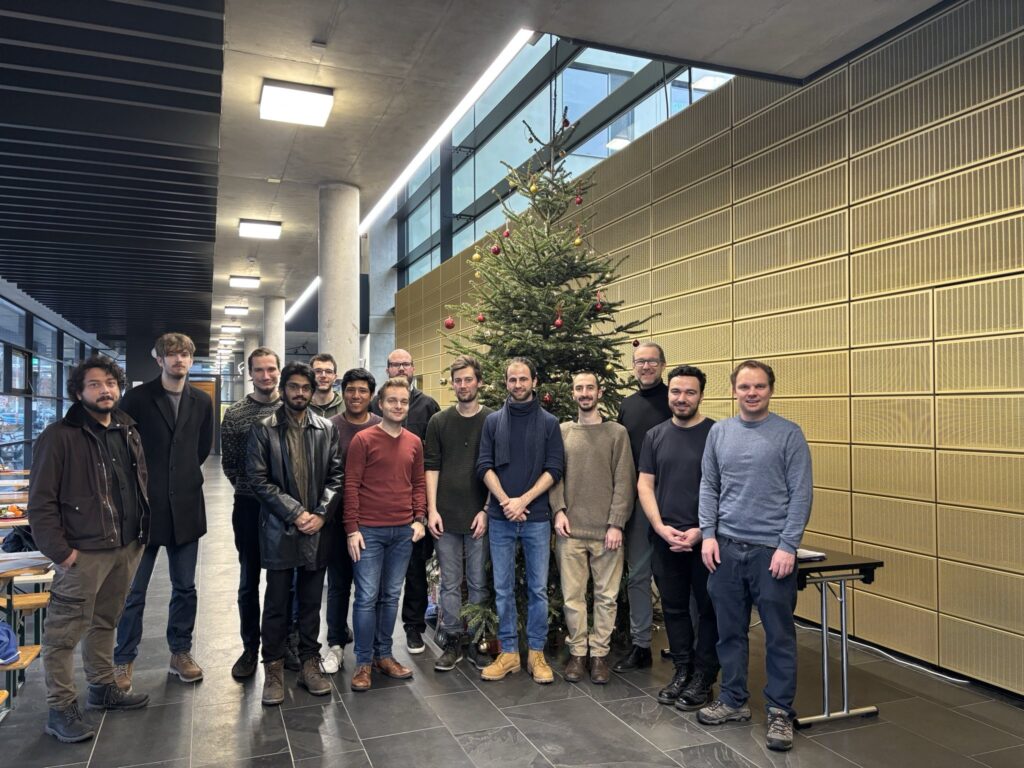
    This year, our group had the honor of hosting the yearly Christmas celebrations for the Physikalisches Institut on 19th December 2024. We hope everyone enjoyed the event and would like to extend our heartfelt thanks to everyone who joined us in the celebration, making it a memorable and enjoyable experience for all. Your participation truly made the event special, and we are grateful for the wonderful community spirit shared during this festive time.

  • New members join Rydberg team !!!

    We are thrilled to welcome Maharshi Pran Bora and Matthias Lotze as our new PhD student and Bachelors student respectively who started with the Rydberg team from October 2024. We look forward to working closely with both of them and witnessing their growth and success in our collaborative environment.

  • “An Experimental Platform for Studying the Heteronuclear Efimov Effect with an Ultracold Mixture of Li-6 and Cs-133 Atoms” now published on Few-Body Systems!

    “An Experimental Platform for Studying the Heteronuclear Efimov Effect with an Ultracold Mixture of Li-6 and Cs-133 Atoms” now published on Few-Body Systems!

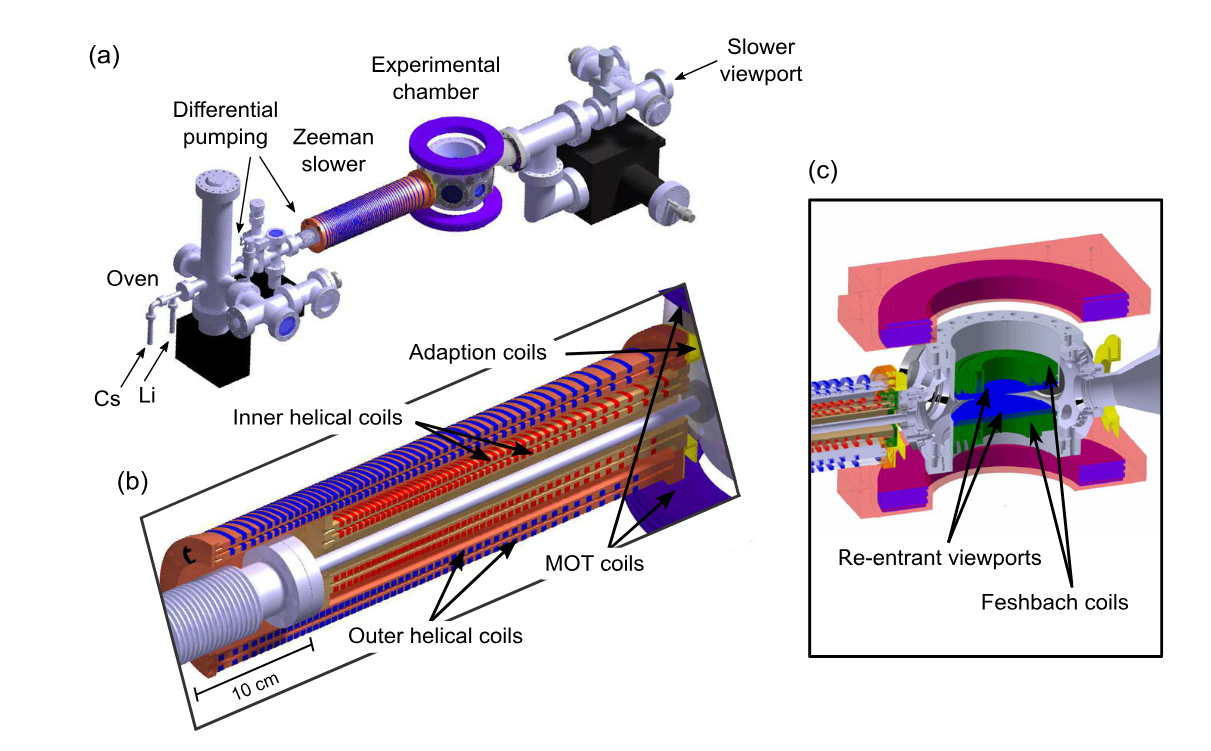
    Our paper describing the Li-Cs mixing experimental apparatus has been now published in the journal Few-Body Systems! Experiments involving atomic mixtures with a large mass imbalance face significant challenges in slowing, cooling, and trapping the species together. This paper highlights the development of efficient techniques to address these issues, focusing on three aspects: slowing of hot atoms, managing of dipole traps, and controlling magnetic fields. This machine allowed the investigation of the heteronuclear Efimov effect in the ultracold Li-Cs mixture as reported in several previous publications.

    Reference:

    Check it out here: An Experimental Platform for Studying the HeteronuclearEfimov Effect with an Ultracold Mixture of 6 Li and 133 CsAtoms

  • Congratulations to Dr. Lippi!

    Congratulations to Dr. Lippi!

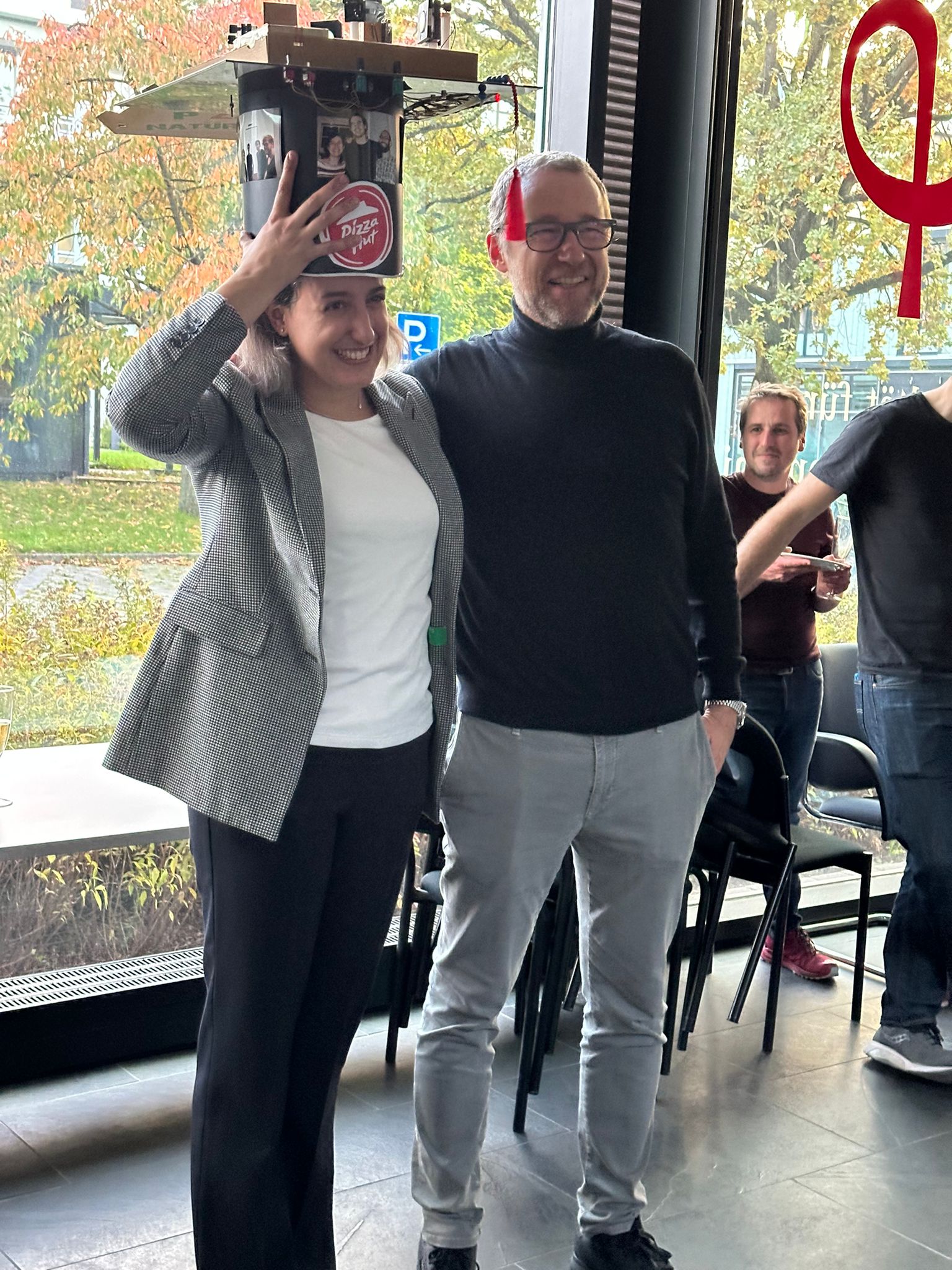
    Congratulations to Eleonora Lippi who today defended her PhD thesis “Cs-133 atoms in a Li-6 Fermi sea for exploring polaron physics in the heavy impurity limit”. It has been a wonderful experience working alongside you and we cannot wait to see what the future brings. We wish you the best of luck!

    Reference:

    PhD Thesis: Cs-133 atoms in a Li-6 Fermi sea for exploring polaron physics in the heavy impurity limit

  • Anna-Katharina Nitschke starts her PhD in the Digital Twins team

    Anna-Katharina Nitschke starts her PhD in the Digital Twins team

    Anna stays with the Digital Twin group after successfully finishing her Master Thesis about an Architecture of Digital Twins of Patients in Urology and will continue her research on Digital Twins in Medicine for applications in Global Health together with partners from the Heidelberg Institute of Global Health and STRUCTURES. We wish good luck!

  • “Anomalous loss behavior in a single-component Fermi gas close to a p-wave Feshbach resonance” published in Phys. Rev. A !

    “Anomalous loss behavior in a single-component Fermi gas close to a p-wave Feshbach resonance” published in Phys. Rev. A !

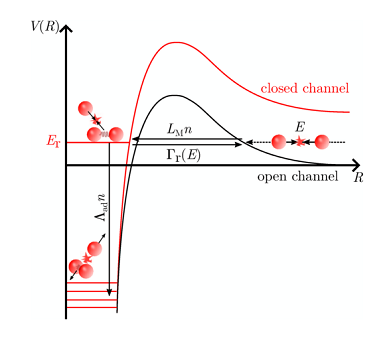
    This month, our paper on “Anomalous loss behavior in a single-component Fermi gas close to a p-wave Feshbach resonance” was published in Phys. Rev. A! In this work we studied the theoretical processes of three-body loss in a p-wave interacting Fermi gas. The study predicts a new type of three-body loss behavior in these kinds of systems which could be observed in lithium-6 polarized in the lowest hyperfine groundstate.

    Reference:

    Welz K, Gerken M, Zhu B, Lippi E, Rautenberg M, Chomaz L, Weidemüller M

    Anomalous loss behavior in a single-component Fermi gas close to a p-wave Feshbach resonance Journal Article

    In: Phys. Rev. A, vol. 107, iss. 5, pp. 053310, 2023.

    Links | BibTeX

  • Eduard starts his PhD in the Rydberg team

    Eduard starts his PhD in the Rydberg team

    Eduard starts today his PhD in the Rydberg group after having successfully ended a Master thesis on nonequilibrium phenomena in disordered spin systems in the same team. We wish you good luck!

  • Mixtures lab plays as “actor” in the video for promoting Isoquant

    Mixtures lab plays as “actor” in the video for promoting Isoquant

    The Mixtures lab appears in the video for promoting Isoquant CRC 1225. Check the video on YouTube!
    This image video was realized within the Isoquant – Science Communication project in collaboration with the scientific film agency Aha! Film. The aim is to explain the spirit of our Collaborative Research Center to a broad audience.

  • Mini-workshop on  polarons

    Mini-workshop on polarons

    On the 8th of December 2022, we had the pleasure to host a mini-workshop on polaron physics. Our LiCs team met with the experimental LiK group of Prof. Rudi Grimm from Innsbruck (Austria) and the theoretical groups of Prof. Richard Schmidt and Prof. Tilman Enss from Heidelberg (Germany). Each of them presented their activities and discussed possible collaborations.